







Myo-inositol or DCI: the difference in form, dosage and composition
Myo-inositol and D-chiro-inositol are two forms of the same substance. They both occur naturally in the body, and your body produces D-chiro-inositol from myo-inositol. In supplements, you will find them in three ways: myo-inositol alone, a combination in a fixed ratio, or pure D-chiro-inositol. The practical difference lies in the amount, the form, and the excipients.
On this page, we compare the two Ovabalance variants side by side, with the numbers per daily dose, so you can compare for yourself. Also with products from other brands.
What is the chemical difference?
Myo-inositol and D-chiro-inositol are stereoisomers: molecules with exactly the same chemical formula, but with the hydroxyl groups in a different spatial arrangement. There are nine of these forms, six of which occur in nature. Myo-inositol is by far the most common, D-chiro-inositol the second known.
The body converts myo-inositol into D-chiro-inositol through an enzymatic process. How efficiently this works varies from person to person and from tissue to tissue. You can read more about this in what is inositol.
The two variants side by side
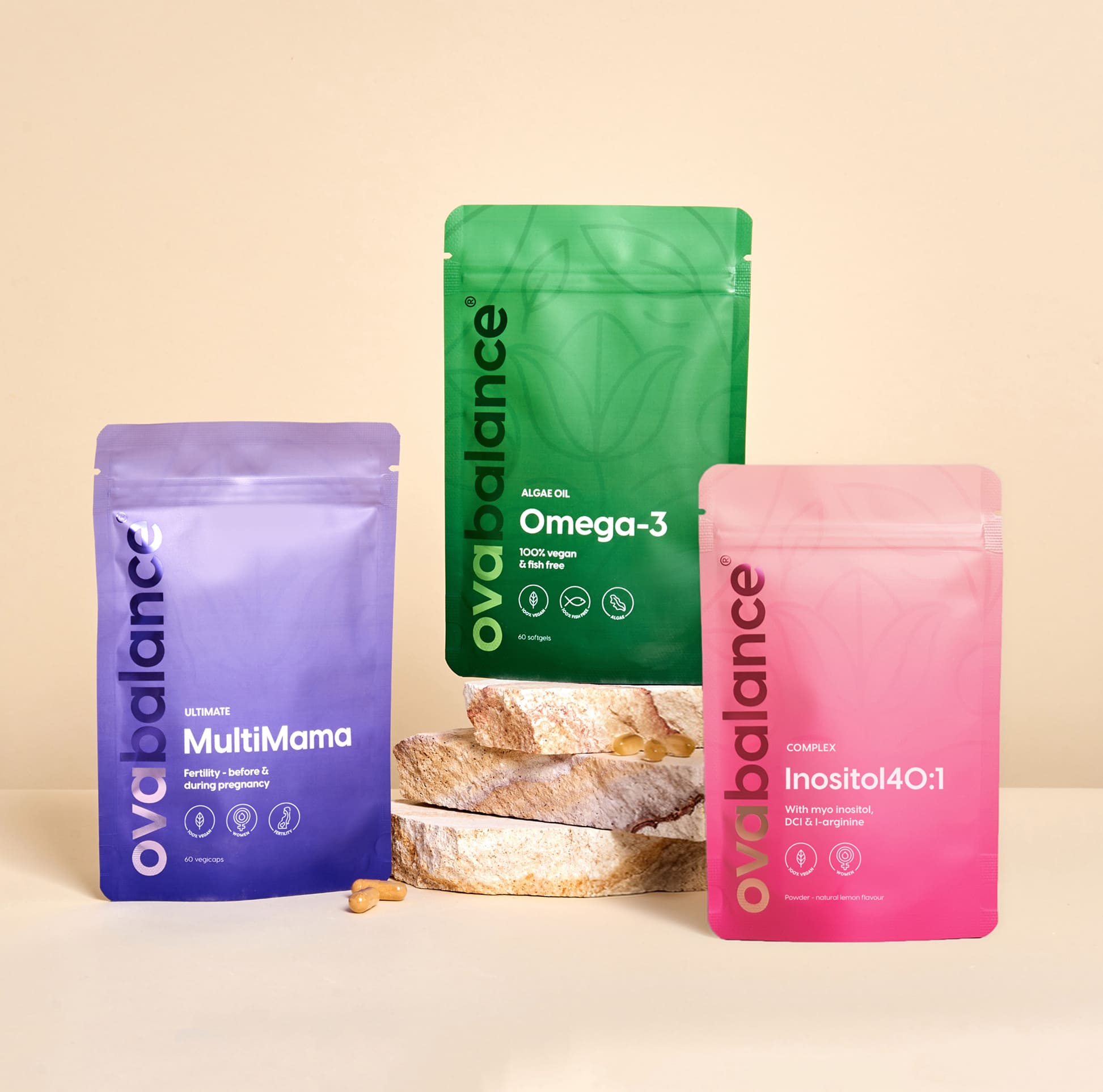
| Inositol 40:1 Complex | D-Chiro-Inositol (DCI) | |
|---|---|---|
| Form | Soluble powder | Capsules, plant-based HPMC shell |
| Myo-inositol per daily dose | 3120 mg | 0 mg |
| D-chiro-inositol per daily dose | 78 mg | 1200 mg |
| Ratio myo : DCI | 40 : 1 | No myo-inositol |
| Other active substance | 800 mg L-arginine | None |
| Daily dose | 1 scoop of 4.5 grams | 2 capsules of 600 mg |
| Package contents | 137 grams, approximately 30 doses | 60 capsules, 30 doses |
| Excipients and fillers | None | None, only the capsule shell |
| Taste | Natural lemon flavor | Unflavored |
| Time of intake | Preferably on an empty stomach | Approximately 10 minutes before breakfast, with 2 capsules spread throughout the day |
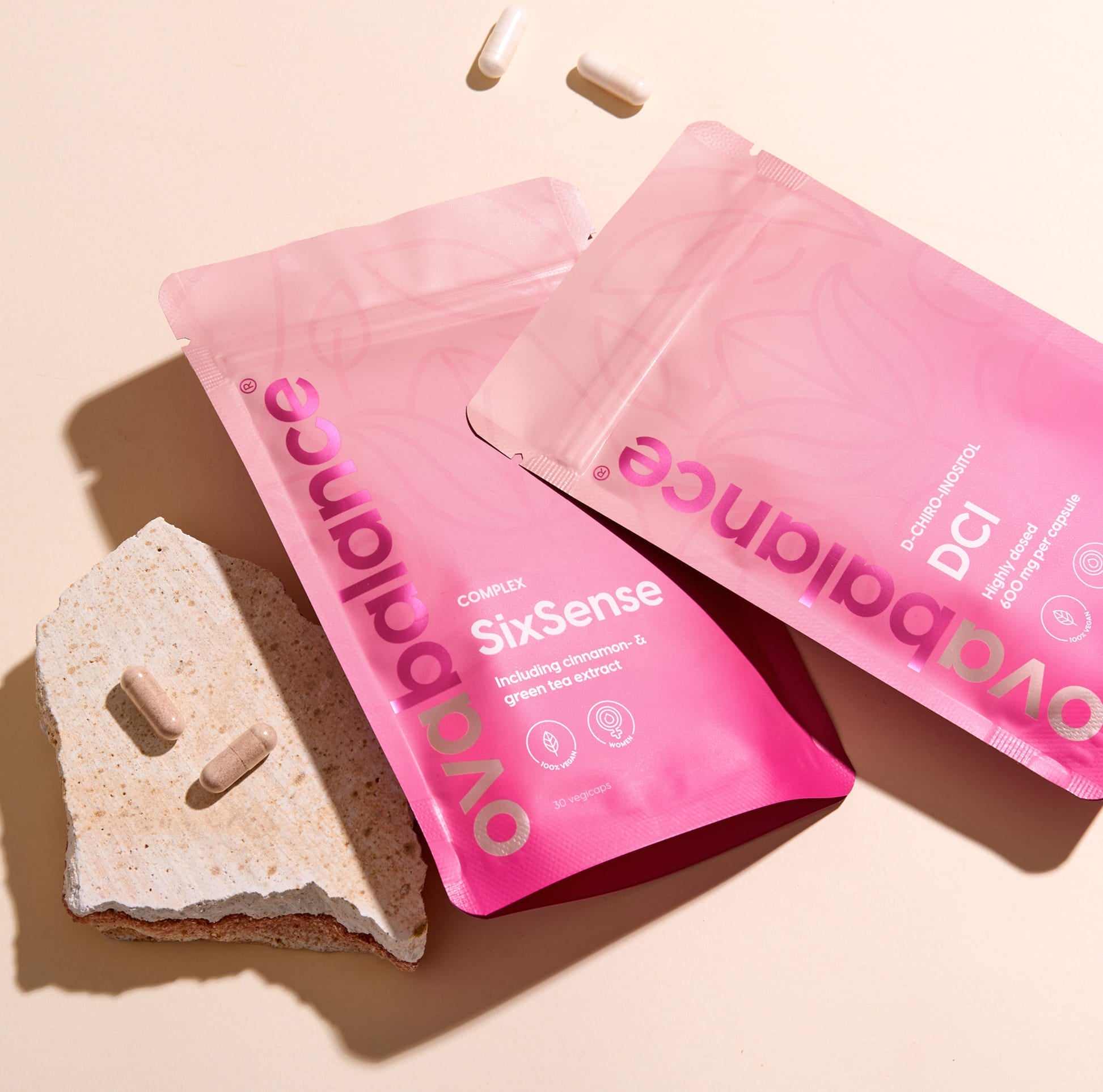
The DCI capsules therefore provide well over fifteen times as much D-chiro-inositol per day as the 40:1 powder. If you weigh less than 60 kg, then according to the instructions for use, one capsule of 600 mg per day is sufficient.
What does 40:1 mean, and why do you also come across 5:1?
A 40:1 ratio means 40 parts myo-inositol to 1 part D-chiro-inositol. That is the ratio in which both forms are found in human plasma, and manufacturers use that as a starting point for the composition. You also come across 5:1, based on measurements in other tissue.
More important than the ratio is the absolute amount. A 40:1 product with 1000 mg myo-inositol contains 25 mg DCI. A 40:1 product with 3120 mg myo-inositol contains 78. The same ratio, three times as much substance. Therefore, always compare the milligrams per daily dose.
Where does it come from?
Myo-inositol is usually obtained from rice bran or through fermentation. D-chiro-inositol comes from the pods of the carob tree, also known as carob. The origin of that carob largely determines the purity of the final product.
Ovabalance uses carob from Spain, with a purity of at least 98 percent and more than 140 quality controls per batch. That is more expensive than carob from other regions of origin, where the chance of pesticide residues is greater.
What to look for when comparing brands?
| Look at | Why |
|---|---|
| Milligrams per daily dose, not per capsule | "600 mg per capsule" says nothing until you know how many capsules the daily dose is |
| Exactly what form is in it | "Inositol" on a label usually means myo-inositol; check if DCI is listed separately and how much |
| The full list of ingredients | The nutritional table only shows the active substances, not the fillers and sweeteners |
| Purity percentage of DCI | It is not always listed; without a percentage you do not know what you are buying |
| Number of doses per package | Determines the actual price per day, not the price per jar |
Can you combine them?
The 40:1 Complex already contains both forms. If you use the powder alongside separate DCI capsules, keep an eye on the total daily intake and consult a doctor if in doubt.
Why does it not say which form is better?
Because European law does not allow that. Food and health claims for supplements are regulated in Regulation (EC) 1924/2006. Only approved claims from the EU register may be used, and for inositol and L-arginine, there are none at this moment. We therefore cannot make statements about what the substance would do in the body, even if we refer to research.
What we can share is exactly what is in it, in what quantity, in what form, and where it comes from. If you want to know more about the scientific state of affairs, you can turn to independent sources such as PubMed, or your general practitioner, gynecologist, or dietitian.
Important to know
Food supplements are not a replacement for a varied diet or a healthy lifestyle. We advise against the use of the Inositol 40:1 Complex during pregnancy and breastfeeding. Do not exceed the recommended daily amount and always consult a doctor when using medication.
Sources
- European Commission, EU register for food and health claims
- Regulation (EC) No 1924/2006 on food and health claims for foods
- Thomas MP, Mills SJ, Potter BVL, The Other Inositols and Their Phosphates, Angewandte Chemie International Edition, 2016
Last substantively checked on September 1, 2026.
Also read: powder or capsules and inositol, berberine and NAC compared.
Sources
- European Review for Medical and Pharmacological Sciences (2019), The 40:1 myo-inositol/D-chiro-inositol ratio
- Guidelines Database, Inositol for PCOS/PMOS
- Journal of Clinical Endocrinology & Metabolism (2024), Inositol for Polycystic Ovary Syndrome
- Cochrane, Inositol in women with PCOS and reduced fertility
Last updated on 3 September 2026. This information does not replace advice from a doctor or other healthcare professional.