










Healthy eating helps you feel good about yourself. How can you support your body during menopause with the right nutrition? Do you eat certain things extra? Or do you avoid certain nutrients? In this article, you will read how your metabolism changes during menopause and what your body needs. Finally, we will tell you more about the use of dietary supplements during this phase of your life.
Contents
What changes in your metabolism during menopause?
Your metabolism ensures that nutrients are converted into energy. The faster your metabolism works, the more calories you burn. Throughout your life, your metabolism is constantly changing. Also during menopause. The hormonal changes you experience during menopause cause a slower metabolism. Your body burns calories more slowly. This can mean that you gain some weight during menopause, even though you are not eating more or unhealthier.

Nutrition and menopause
Eating healthy is important to maintain your weight during menopause. Good nutrition also supports the health of your strong bones. This becomes increasingly important as you get older, especially when you enter menopause. The hormone estrogen plays an important role in your bone health. And it just so happens to be a hormone that is produced in much smaller amounts from the onset of menopause.
To keep your bones healthy, make sure you include plenty of dairy products in your diet. Aim for several servings of milk and yogurt a day, as well as two slices of cheese and extra vitamin D. It is also good for your health to eat plenty of fruits and vegetables. To get healthy fats, also regularly choose fatty fish, unsalted nuts, or avocado in your meals.
Exercise during menopause
Besides eating healthy, staying active is also good for you. Women aged 50 or older who do not exercise have a 10% lower resting metabolism than women who do exercise1. This amounts to about 600 calories per week that you burn less when you do not exercise1. That really makes a difference. So exercise is important. In short: stay active to keep your metabolism active and your weight healthy.
Menopause and dietary supplements
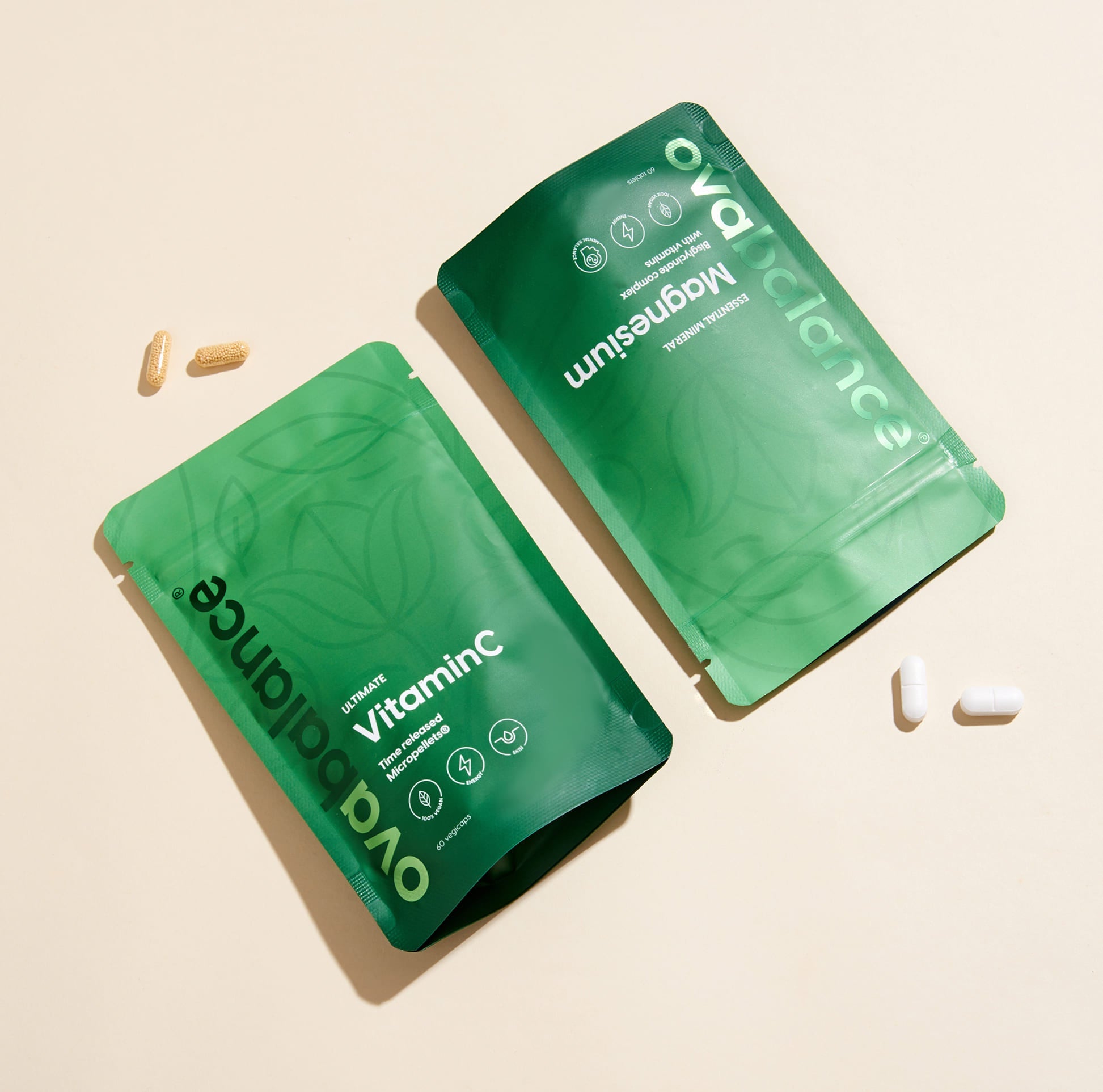
Taking a vitamin D3 supplement is good for maintaining healthy bones. Vitamin D helps your body absorb calcium properly from your diet. A good addition to a vitamin D3 supplement is its partner: vitamin K2. Vitamin K2 also helps maintain strong bones. By taking vitamin D3 and K2 together, you support your bone health.
During menopause, minerals can also provide extra support. For example, magnesium plays a role in maintaining strong bones, just like vitamin D3 and K2.
Natural support during menopause
OvaBalance has specially developed a supplement for you that supports you during menopause: Ovabalance Menoformula. The Menoformula contains plant extracts of silverweed, Kudzu, Maca, and hop. Hop extract can help improve sleep* and reduce irritability*, because it has a calming effect. Silverweed supports your body with night sweats*, mood swings* and hot flashes*.
*Health claim awaiting European approval

Do you like drinking tea?
You can also support your body during menopause with a nice cup of warm tea. Take the Menopause Comfort Tea with 100% natural ingredients. The lemon balm in the tea helps you feel comfortable during menopause* and both lemon balm and chamomile help you relax more easily*.
*Health claim awaiting European approval
What do you prefer to avoid during menopause?
While certain foods are good during menopause, there are also products that are better to avoid.
Spicy or hot spices can cause hot flashes. So be careful about adding red pepper, ginger, or curry to your dish;
Alcohol and caffeine can keep you awake or disrupt your sleep pattern. Many women experience sleep problems during menopause, and you naturally do not want to make that worse. So be moderate with alcohol and caffeine-containing drinks such as coffee, energy drinks, and cola;
Too much sugar or salt is never good for the body, but especially now during menopause, it is a good idea to take this into account.
Sources: