












Hair loss, unfortunately, affects us women, but also men, every day. Some more than others. At first, hair loss is no reason to panic, as we lose an average of 50 to 100 hairs a day. This may seem like a lot, but it isn't when you consider that we have over 100,000 hair follicles on our scalp.
Men generally accept it more easily when their hair thins and falls out. Male baldness is quite common and seems to be more socially accepted.
This is in contrast to hair loss in women. Is your hair becoming significantly thinner, and are bald patches developing as a result? At Ovabalance, we are happy to discuss the causes of hair loss with you and give you 5 tips on what to do about hair loss in women.
Contents
Causes of hair loss
Hair loss can have several causes. We have explained a few below.
Stress
Stress is a common cause of hair loss. Stress is not very bad at first; we all experience it sometimes, and it helps us use our time efficiently. However, if you do not compensate for stress with enough relaxation, it will get the better of you. It takes a toll on you physically and mentally, which in turn affects your hormonal balance.
Crash diets
It is common for women to be very concerned about their weight. The temptation to starve yourself to lose a few kilos quickly is always there. Crash diets are never the solution for losing weight and also cause a nutrient deficiency. This takes a toll on the thyroid gland, which also does not benefit hair health. This can eventually lead to excessive hair loss.
By the way: Crash diets can affect the thyroid gland, but a thyroid condition can also be the cause of hair loss.
Hereditary
It may not be the cause you want to hear, but hair loss in women can be hereditary. Check with your parents or family to see if they also suffer from thinning hair or significant hair loss. In hereditary hair loss, you often develop bald patches on your head.
Hormonal imbalance
Hormonal hair loss is caused by fluctuations in the hormone balance and a sudden drop/rise in hormones in the body.
These hormonal fluctuations occur, for example, during menopause, but also during and after pregnancy, when oestrogen levels drop.
PCOS can also be the cause of hair loss. PCOS is a hormonal imbalance that occurs in approximately 10% of women of childbearing age. The symptoms include:
No or irregular menstruation (less than 8 times a year);
Mood swings;
Acne;
Difficulty losing weight or gaining weight easily;
Excess body hair;
And also hair loss.
Women with PCOS are more likely to have elevated DHT (dihydrotestosterone). DHT is a stronger variant of the male hormone. This hormone plays a role in hair loss and baldness because it causes a hair follicle to die earlier.
Tips for hair loss in women
Despite the various causes, there are also a few tips we would like to give you regarding hair loss in women. We give you tips below:
If you want to read these and more tips for hair loss later, download the free e-book directly below:
1. De-stress
Do you think stress is the cause of your hair loss? Then that is a warning that it is time to take a step back. Do not take on too much and relax! It is very important for both your physical and mental health to relax regularly.
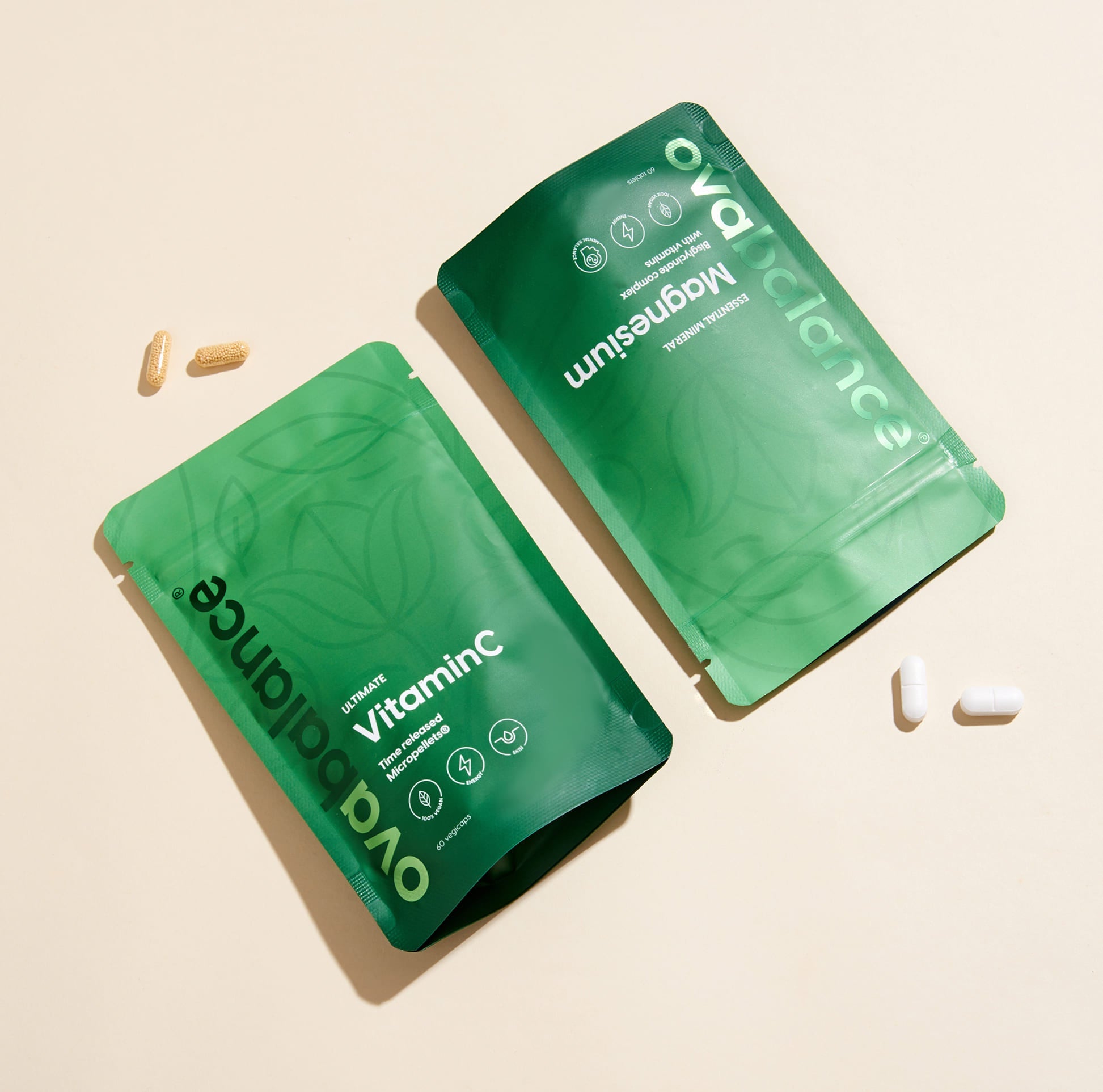
Could you use some help with this? Take a look at additional supplements for stressful situations. Vitamin B12* has a beneficial effect on reducing fatigue and lack of energy. And magnesium is also good for your mood, memory, and concentration.
2. A balanced diet
Of course, a healthy diet also plays a role. When you are healthy on the inside, it shows on the outside. Getting the right nutrients is very important, both for your health and for maintaining hair growth.
Proteins, which you find in meat and eggs, for example, are important. But getting enough omega-3 fats is especially underestimated. Vegetarians and vegans especially have more difficulty with this. Supplements are an ideal addition then.
Taking Algae Oil Omega 3 helps you get enough omega-3 fats, and a vitamin B12 melt tablet helps you get enough B12 without having to eat animal products.
3. Sufficient vitamins
Not only getting enough nutrients, but also vitamins can keep your hair growth healthy. Check if you are getting enough vitamins; if not, taking vitamin B supplements may help.
4. Organic soap
Harmful hair products can also affect your hair growth. Many shampoos contain Sodium Lauryl Sulfate, which makes the shampoo lather well. Many women think this is good, but SLS can also be too harsh for your scalp.
So check the ingredients list of your shampoo too. Is it really as good for your hair as the product makes it seem? With our organic shampoo you can be sure you are being kind to your locks. Completely free of hormone-disrupting substances.
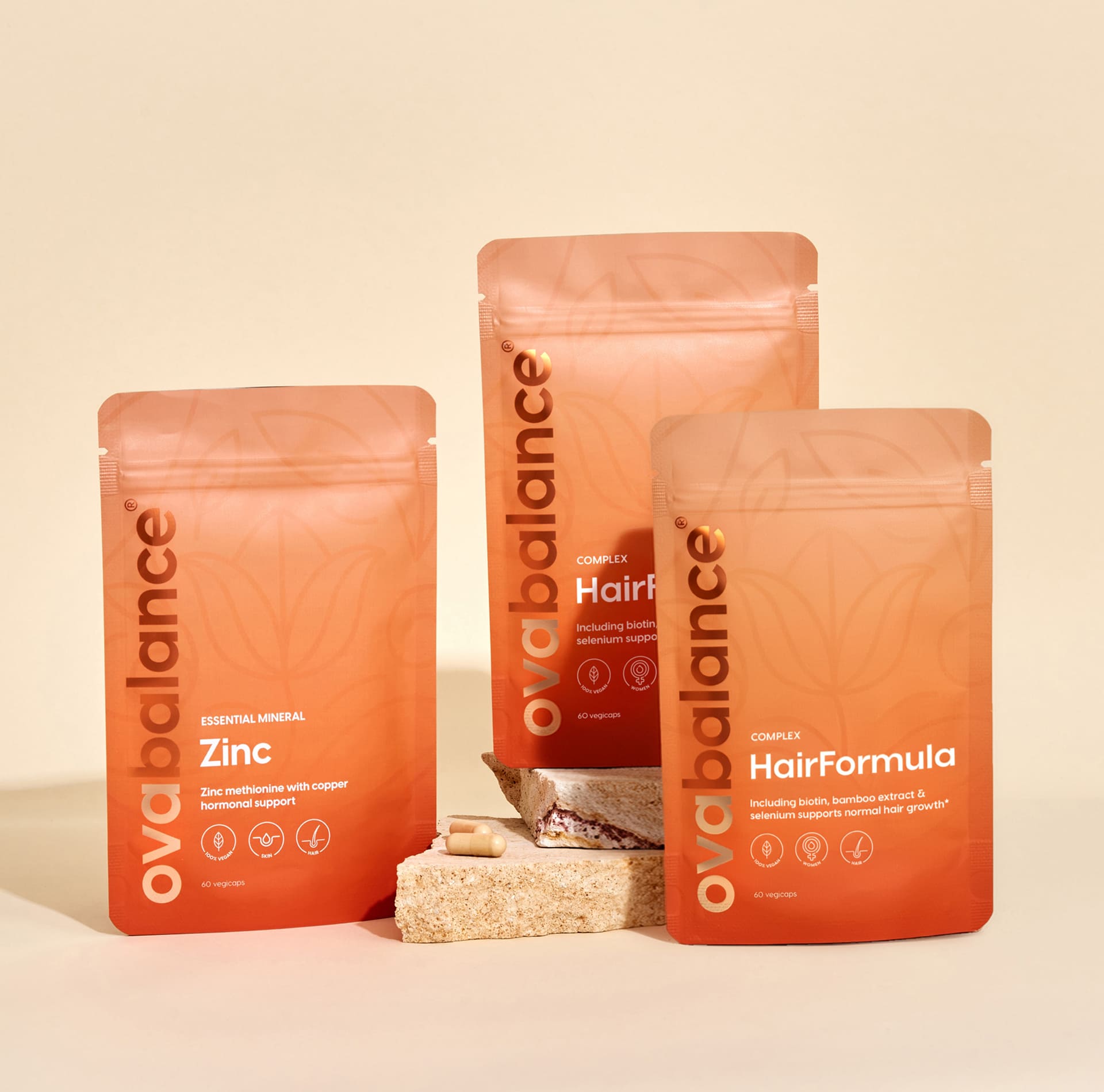
5. Hairformula, Saw Palmetto or zinc supplements
Zinc* contributes to normal hair growth and helps maintain normal skin.
Saw Palmetto, also known as palm saw, is a type of palm tree that occurs mainly in the southeastern United States. Saw palmetto is processed as saw palm extract in supplement form.
Saw Palmetto complex consists of 4 natural substances: saw palmetto**, milk thistle, nettle leaf, and pumpkin seed extract.
Saw palmetto contributes to normal hair growth** and milk thistle supports the liver's cleansing function**
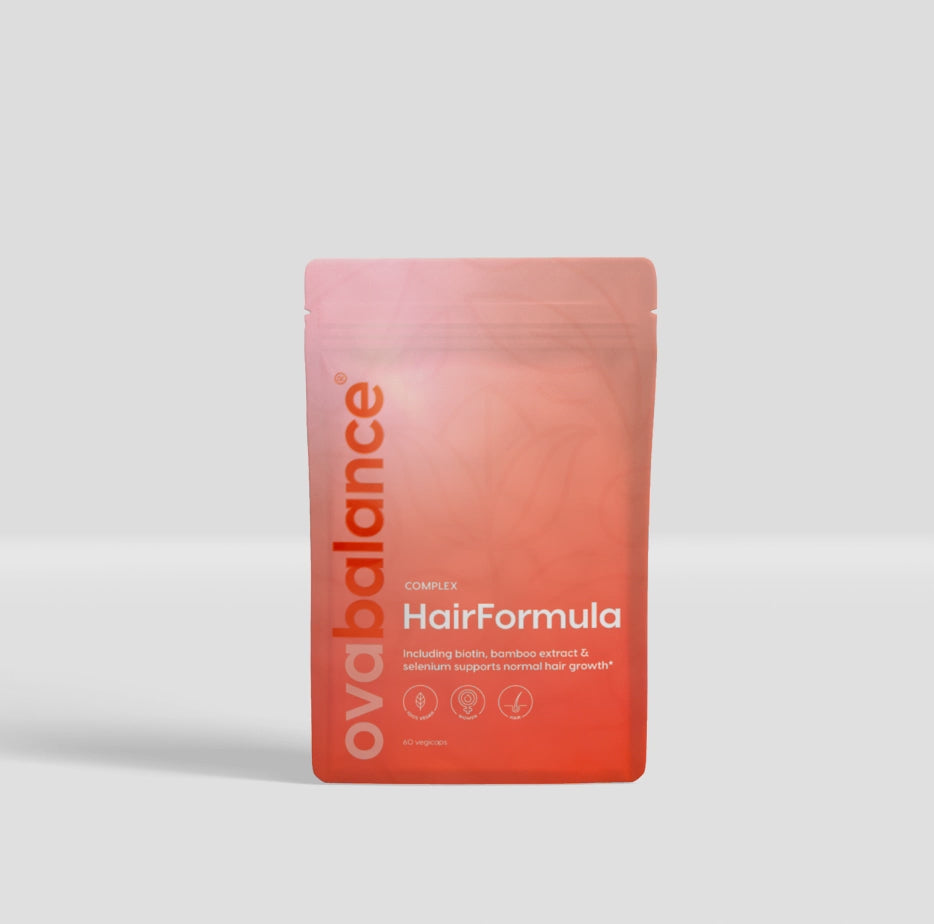
The Hairformula complex consists of nine real hair nutrients. Among them are biotin, zinc, and selenium. Zinc and selenium contribute to normal hair growth.
And zinc also contributes to the maintenance of normal nails. That's a nice bonus!
We have put the other tips in a handy e-book! You download it for free by filling out the form below, and you will receive the e-book directly.
Due to legislation regarding health claims, we cannot provide detailed information about the ingredients in Ovabalance supplements. In accordance with the legislation, we keep information about supplementation separate from the promotion of our products. If something is unclear and you have a question, feel free to contact us.
*Approved health claims
**Health claim evaluation is ongoing
Always read up on it yourself
Before you get started with one of our tips and supplements, read all the information carefully and check if the supplements are compatible with any medications. If the hair loss is extreme and you have already tried all these tips, contact your general practitioner for a specific examination. Of course, if you have any questions, you can always contact us!